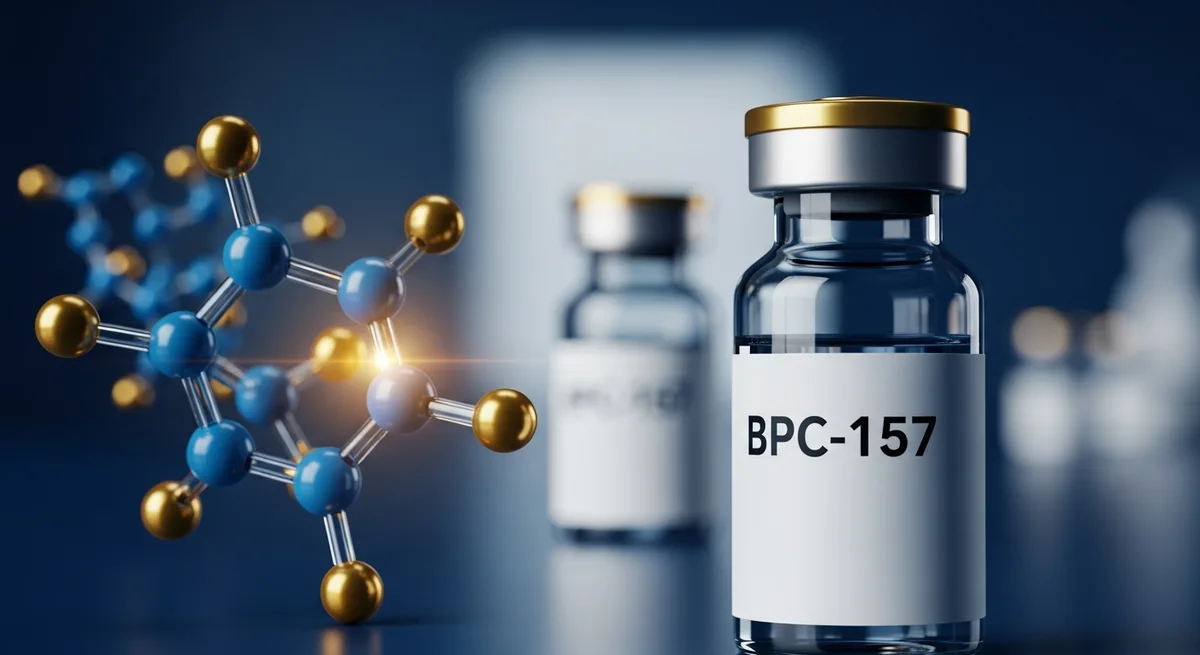
If you are reading this, you have probably come across the word “peptides” in the context of health, performance, recovery, or longevity. You may have seen bold claims online, or you may have spoken with someone who had a positive experience. Either way, you are trying to figure out what is real, what is relevant to you, and what is worth taking seriously.
This guide is not a sales pitch. It is a practical starting point for understanding what peptide therapy actually is, how it works in a clinical setting, and what you should consider before starting.
What Peptides Are
Peptides are short chains of amino acids, typically between 2 and 50 amino acids in length. Your body produces them naturally. They act as signalling molecules, carrying instructions between cells and systems. In simple terms, they tell parts of your body what to do: repair tissue, regulate inflammation, support immune function, modulate sleep, influence metabolism, and more.
When we talk about peptide therapy, we are talking about introducing specific synthetic peptides that mirror or support these natural signals. The goal is not to override your biology. It is to support processes that may be underperforming due to age, stress, injury, or chronic imbalance.
How Peptide Therapy Differs From Conventional Medication
Most conventional medications work by blocking something: blocking pain signals, blocking inflammatory pathways, blocking receptor activity. Peptides generally work differently. They are studied for how they may support or modulate biological processes rather than suppress them.
This is part of why peptides are discussed in recovery, longevity, and performance contexts. The intent is typically to work with the body’s existing systems, not to override them.
That said, peptides are not magic. They are tools. Their value depends entirely on whether they are appropriate for the person, whether the protocol is well-designed, and whether the product quality is reliable. Without those three elements, even a well-researched peptide becomes guesswork.
Common Categories of Peptide Therapy
Peptides are often grouped by what they are studied for. Here is a practical overview of the most commonly discussed categories.
Recovery and Tissue Repair
These peptides are most often considered when someone is dealing with slow healing, recurring soft-tissue injuries, tendon irritation, or post-injury rehabilitation that has plateaued.
- BPC-157 is studied for its relationship to tendon, ligament, and gut tissue repair signalling. It is one of the most widely discussed recovery peptides.
- TB-500 is studied for systemic recovery support, particularly in patterns of recurring strain, overuse, and soft-tissue limitation.
- These are often considered when rehab alone is not resolving the issue and a physician believes soft-tissue signalling support may be appropriate.
Cognitive Support and Stress Resilience
These peptides are discussed for focus, mental clarity, and stress-response regulation, particularly by people who feel their cognitive stamina has declined.
- Semax is studied for its relationship to BDNF signalling, attention, and cognitive throughput. It is commonly administered as a nasal spray.
- Selank is studied for anxiolytic and stress-modulating effects, often discussed alongside Semax when stress physiology is impairing focus.
Longevity and Sleep Support
These peptides appear in longevity-oriented planning, particularly around sleep regulation, circadian rhythm stability, and cellular maintenance.
- Epithalon is studied for its relationship to telomere biology and pineal gland signalling. It is often discussed in the context of sleep quality and long-term cellular health.
- Sleep improvement alone, without any peptide, often produces more measurable benefit than people expect. Peptides in this category should complement fundamentals, not replace them.
Immune Modulation
These peptides are discussed for immune system support, particularly in the context of chronic immune imbalance, recurrent illness, or immune recovery.
- Thymosin Alpha-1 is studied for immune regulation and is used in some clinical settings for immune support.
- Thymosin Beta-4 is studied for tissue signalling and immune modulation, sometimes discussed alongside recovery protocols.
Skin, Hair, and Connective Tissue
These peptides target external signs of aging and tissue quality.
- GHK-Cu is studied for skin remodelling, collagen signalling, and wound healing support.
- Peptides in this category are often topical or part of a broader longevity-oriented plan.
Body Composition and Metabolism
Growth hormone secretagogues and metabolism-related peptides are discussed for body composition goals, though they require careful clinical context.
- These include peptides like CJC-1295, Ipamorelin, and Tesamorelin.
- They are studied for how they may support natural growth hormone release, which influences fat metabolism, muscle preservation, and recovery.
- These peptides require physician oversight. Growth hormone pathways are not something to experiment with casually.
How Peptides Are Administered
The route of administration depends on the peptide and the clinical goal:
- Subcutaneous injection is the most common method for most peptides. It involves a small needle just under the skin, similar to how insulin is administered. Patients are trained on proper technique.
- Nasal spray is used for certain cognitive peptides like Semax and Selank, providing rapid absorption.
- Oral administration works for selected peptides, particularly those studied for gut-related effects like BPC-157 oral.
- Topical application is used for skin-targeted peptides like GHK-Cu.
Your physician determines the appropriate route based on the peptide, the goal, and your medical context.
What a Responsible Protocol Looks Like
The most important thing to understand about peptide therapy is that the peptide itself is only one piece. A responsible protocol includes:
-
Clinical assessment first. Understanding what is actually driving your symptoms before selecting a peptide. Many issues that people attribute to “needing a peptide” are actually driven by sleep disruption, metabolic imbalance, nutrient deficiency, or training errors.
-
Clear goal setting. A protocol should have a defined objective, not just “optimise everything.” Are you addressing a specific recovery issue? Sleep quality? Cognitive stamina? The goal shapes the protocol.
-
Conservative protocol design. More peptides is not inherently better. A well-designed, monitored protocol with one or two peptides often outperforms an aggressive stack that is not being tracked.
-
Monitoring and adjustment. Regular follow-up allows your physician to assess response, adjust dosing, and determine when to continue, modify, or discontinue.
-
Addressing fundamentals. Sleep, nutrition, stress management, and rehabilitation should be part of the conversation. If the fundamentals are ignored, the protocol becomes guesswork.
The Product Quality Question
This is the topic most beginners overlook, and it is arguably the most important one.
Peptides are widely available online in “research-grade” form. These products are manufactured for laboratory use, not human therapeutic use, and may carry risks related to sterility, purity, endotoxin contamination, and inaccurate labelling.
Clinical-grade peptides are manufactured under pharmaceutical conditions with mandatory testing for sterility, endotoxins, purity, and identity. Every batch comes with a verifiable Certificate of Analysis (COA).
If the product is unreliable, no protocol design can compensate for that. This is why sourcing matters as much as the peptide selection itself. For a deeper look at this topic, see our detailed guide on clinical-grade vs research-grade peptides.
What to Expect When Starting
If you are considering peptide therapy for the first time, here is a realistic picture of the process:
- Initial consultation: A physician reviews your health history, current symptoms, goals, medications, and relevant context. This is not a quick transaction. It is a clinical conversation.
- Protocol design: Based on the assessment, your physician may recommend a specific peptide protocol, or may recommend addressing fundamentals first. Not every consultation ends with a peptide prescription, and that is a good sign.
- Education and training: If a protocol is appropriate, you receive your clinical-grade peptides with instructions on administration, storage, and what to monitor.
- Follow-up: Regular check-ins allow adjustment based on your response. Protocols are not set-and-forget.
Common Mistakes Beginners Make
Based on clinical experience, these are the patterns that most often lead to poor outcomes:
- Starting with too many peptides at once. It becomes impossible to know what is working and what is causing side effects.
- Skipping the clinical conversation. Self-prescribing based on internet forums misses the diagnostic step that makes protocols appropriate.
- Ignoring product quality. Saving money on research-grade sourcing while spending money on a protocol is a contradiction.
- Expecting instant results. Most peptide protocols require weeks of consistent use before meaningful changes are observed.
- Neglecting fundamentals. No peptide compensates for poor sleep, chronic stress, or nutritional deficiency.
Getting Started in Thailand
Peptides Thailand offers physician-led peptide therapy through in-person care in Chiang Mai and video consultations for patients across the country, including Bangkok, Phuket, Pattaya, Hua Hin, and Koh Samui.
All peptides are clinical-grade, sourced from licensed Thai compounding laboratories with COA verification. Protocols are designed and monitored by licensed physicians.
If you are ready to have a clinical conversation about whether peptide therapy is appropriate for your situation, book a consultation to start with a proper assessment.
Beginner FAQs
Are peptides safe?
Safety depends on product quality, medical oversight, and appropriate use. Clinical-grade peptides prescribed by a physician within a monitored protocol represent the safest approach. Self-directed use of research-grade products carries meaningfully higher risk.
How long does it take to see results?
This varies by peptide and goal. Some people notice changes within days (particularly with cognitive peptides), while recovery and longevity protocols typically require weeks of consistent use before meaningful changes are observed.
Do I need a prescription for peptides in Thailand?
Clinical-grade peptides prescribed through a physician-led practice like Peptides Thailand are dispensed as part of a medical protocol. This is different from buying research-grade products online without medical involvement.
Can I use multiple peptides at the same time?
Sometimes, but stacking should follow a clear clinical rationale and include monitoring. Starting with fewer peptides and adding only when needed is generally the safer approach.
What if I am already taking medication?
This is exactly why physician involvement matters. Your clinician reviews your full medication profile before recommending any peptide protocol to check for interactions and contraindications.
How do I know if peptide therapy is right for me?
Start with a consultation. A good clinician will assess whether a peptide protocol fits your clinical picture, or whether other interventions should come first. Not every consultation ends with a peptide prescription, and that is appropriate.