What Is BPC-157?
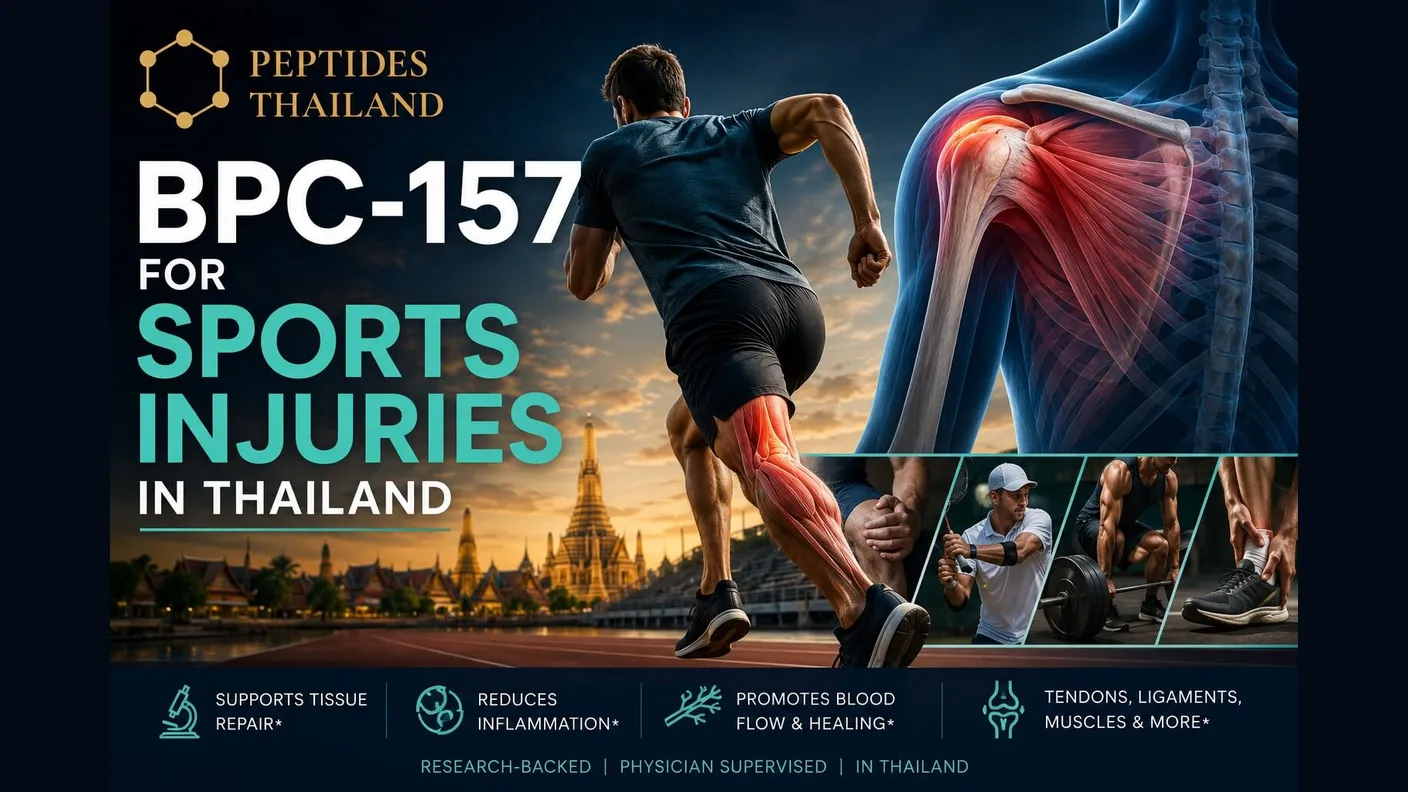
BPC-157 (Body Protection Compound 157) is a synthetic peptide derived from a protein found in gastric juice. Laboratory and animal research has examined its potential role in tissue repair, including tendons, ligaments, muscles, and blood vessels. It remains an investigational compound: no major regulatory body has approved it as a treatment for sports injuries, and human clinical trial data are limited.
At Boston Health Polyclinic in Bangkok, physicians review the available research, discuss realistic expectations, and only proceed with peptide protocols when clinical assessment supports doing so.
Sports Injuries Researchers Are Studying
Pre-clinical research has examined BPC-157 in relation to several soft-tissue injury types. The findings below come from animal studies and laboratory models; they do not confirm efficacy in human patients.
Tendon Injuries
Tendon healing has received the most attention in BPC-157 research. Animal studies have observed accelerated collagen remodelling, improved fibroblast activity, and faster load-bearing recovery in models of Achilles and patellar tendon damage. Tendons heal slowly due to poor blood supply, which makes them a focus of peptide research generally.
Ligament Injuries
Ligament injuries, including anterior cruciate ligament (ACL) damage, have been examined in rodent models. Some studies report improved collagen organisation and earlier functional recovery, though the mechanisms are not fully understood.
Muscle Tears and Strains
Skeletal muscle has a better intrinsic repair capacity than tendons, but severe tears can leave scar tissue that limits performance. BPC-157 animal studies have examined whether it supports muscle fibre regeneration and reduces fibrosis after injury.
Joint and Bone Health
Some research has looked at cartilage and bone healing in animal models of joint injury. Findings are preliminary and have not been replicated in robust human trials.
What the Evidence Actually Shows
It is important to be direct about the state of evidence. As of mid-2026:
- The vast majority of BPC-157 research has been conducted in animals, primarily rodents.
- No large, randomised, placebo-controlled clinical trials in humans have been published.
- Regulatory agencies including the FDA, TGA, and EMA have not approved BPC-157 for any indication.
- The mechanisms proposed in animal studies may not translate to human physiology.
This does not mean the research is uninteresting. Several sports medicine researchers consider it a promising area of inquiry. It does mean that confident claims about outcomes in human patients are not supported by the current evidence base.
Why Rehabilitation Remains Central
Regardless of adjunct therapies considered, structured rehabilitation remains the foundation of sports injury recovery. Progressive loading, physiotherapy, and graduated return-to-sport protocols have the strongest evidence base across tendon, ligament, and muscle injuries.
Any peptide protocol considered at our clinic is discussed in the context of a broader rehabilitation plan, not as a replacement for it.
Physician-Supervised Peptide Therapy in Thailand
Thailand’s regulatory framework permits physician-supervised use of investigational peptides in clinical settings. Athletes and active individuals travelling to Bangkok for treatment can access a formal consultation, imaging review if needed, and a monitored protocol.
Our physicians discuss:
- The current research literature relevant to the injury type
- Realistic expectations and the limits of available evidence
- How peptide therapy would integrate with ongoing rehabilitation
- Monitoring, follow-up, and protocol adjustment
Who May Be a Candidate
Physician assessment is required before any protocol begins. Factors typically reviewed include injury type and severity, medical history, current medications, and rehabilitation status. BPC-157 is not appropriate for everyone, and the consultation process exists to determine whether it may be clinically relevant for a specific individual.
Taking the Next Step
If you are recovering from a sports injury and want to discuss whether peptide therapy might be relevant to your situation, book a consultation with our Bangkok clinic. Our physicians will review your case honestly, including where the evidence is strong and where it remains limited.